Pages

[Winner] Hackarde 1st Contest Winner Announcement

0 comments

Announcement Of Hackarde 1st Contest Winner

Some days before i am announce a contest of My blog Hackarde. I am found good response and it good for my all viewer.The prize of 1st Contest is the book of G8t hacker Kevin Mitnick which name is Ghost In The Wires.

Today according to my promise i am going to announce the Winner name of Hackarde 1st contest.So the name is

1st winner
Iqbal

2nd winner
Justin123

3rd winner
Tam le

I am request to my Winner plz send his Confirmation Email by his registered Email ID to me and after confirmation i am send your copy.


Recall Sent Emails From Gmail

0 comments

Some time when you send your email to another person then simultaneously you remember to add something new and important to your send message but you unable to add information on send mail.

My today trick help you in this case so first step here is you go to your Gmail account and Open 'Lab' like below picture...


Under Lab you found many option but you directly go to 'Undo Send' like below picture and enable the 'Undo send' go to Save Change Button and clear the change...


After done all work Go to your Account Compose mail option and write Your Mail and send it,when you send the mail then Gmail tell you 'Your message has been Sent' with Undo option.Click the Undo if you want to break the sending of mail.


Remember this Undo option appear only for 10 Seconds.

Microsoft Security Update Guide

0 comments

This post about the Microsoft Security Update and his Guide who tell you enhance and use of Microsoft security features.
This guide helping IT Professional Better Understanding and maximize Microsoft Security Update release information,Process,Communications,and Tools.


After success of First Edition Microsoft launch Second Edition with more Update.This Second Edition of the Microsoft Security Update Guide includes additional content describing how Microsoft tests security updates before they are released, revised advice and guidance on testing updates in your own environment, and an expanded and updated resources section. Our goal with the Guide is to help IT professionals manage organizational risk and develop a repeatable, effective deployment mechanism for security updates. In the Guide, you will find a convenient glossary of terms, an overview of the Microsoft Security Bulletin process, and a stage-by-stage review of Microsoft Security Updates. The Guide is organized according to the following stages of the security update process:

Stage 1: Receive Microsoft Security Release Communications
Stage 2: Evaluate Risk
Stage 3: Evaluate Mitigation
Stage 4: Standard or Urgent Update Deployment Timeline
Stage 5: Monitor Systems, and; Ongoing Stage, Watch. Each section outlines the purpose and objective for that stage, as well as the expected target outcomes upon that stage’s completion.

For Download This Guide Click Here

Wireless Attacks

0 comments

My today threads based on about Wireless Attacks.Here first i am tell you Type of Wireless attacks and about his,and in my future thread i am tell about how it is done and how can you do it.So for future post please read this thread very clear fully and if any query come then ask me very friendly by your comment and mail.

There are various kinds of wireless attacks. The following are some methods hackers use to facilitate wireless attacks:

• Wardriving: Wardriving is a technique hackers use to locate insecure wireless networks while
driving around.
• Warflying: Similar to wardriving, warflying involves flying around in an aircraft, looking for open
wireless networks.
• Warchalking: Warchalking involves using chalk to place a special symbol on a sidewalk or another surface to indicate a nearby wireless network that offers Internet access.

Passive Attacks:

A passive attack is a type of attack where an unauthorized user monitors communications to gather information.For example, eavesdropping on network traffic is a passive attack. An eavesdropper can easily seize the network traffic using tools such as Network Monitor, Tcpdump, or AirSnort.

Active Attacks:

Active attacks on wireless networks are similar to those on wired networks, in which an attacker tries to alter or corrupt the data or services on a network. These types of attacks include flooding, spoofing, and unauthorized access. The information that an attacker collects during a successful passive attack can make it easier for him or her to actively attack a network.

Denial-Of-Service Attacks:

Wireless systems are vulnerable to the same protocol-based DoS attacks that strike wired networks. They are also vulnerable to other types of DoS attacks, because the signals used to transmit data over the air can be easily disrupted. The main objective of DoS attacks is to deny access to network services and resources. It is difficult to track such attacks on wireless networks.
Modes of Attack DoS attacks have varied modes of attacks that include consumption, alteration, and physical destruction of network components or resources. The following are some common modes of attack:
• Consumption of resources: This involves consuming the resources a system needs, including the following:
# Bandwidth: An intruder can redirect packets to the network in order to consume all of the available bandwidth on the network.
#Memory: This is normally accomplished by saving unnecessary e-mails, causing intentional errors, or sharing unimportant files and folders.

• Alteration of resources or information: Altering the configuration of a machine can prevent a user from being able to use it.
• Physical destruction of the computer/network elements: This type of attack concerns the destruction of the physical elements, such as computers and routers.

Flooding:

The goal of flooding is to degrade the performance of the network by directing unnecessary packets of data toward it. This may result in a loss of connection requests or a complete denial of service. Flooding is a multicasting technique wherein packets from one source are directed toward multiple destinations on the network.

Man-In-The-Middle Attacks:

A man-in-the middle (MITM) attack is when an intruder accesses information being transmitted between the sender and the receiver. The transmission proves to be insecure because the information is not encrypted. In such cases, there is a possibility of the intruder altering the data.
The following are the two types of MITM attacks:
1. Eavesdropping: Eavesdropping is a passive attack technique. The attacker intercepts data being transmitted between one system and another. Security mechanisms such as IPSec, SSH, and SSL help prevent eavesdropping.
2. Manipulation: Manipulation is an extended step of eavesdropping. In this type of man-in-the-middle attack, the attacker manipulates the data that he or she intercepts. This manipulation can be done using a technique such as ARP poisoning.


Hijacking and Modifying Wireless Network:

In a wireless network, TCP/IP packets go through switches, routers, and wireless access points. Each device looks at the destination IP address and checks for that address in its table of local IP addresses. This table is dynamically built up from traffic that passes through the device and from Address Resolution Protocol (ARP) notifications from devices joining the network. If the destination IP address is not in the device’s table, it passes the address off to its default gateway.
However, there is no authentication or verification of the validity of a packet that a device receives. A malicious user can send messages to routing devices and access points stating that his or her MAC address is associated with a known IP address. All traffic that goes through those devices that is intended for the hijacked IP address will instead go to the malicious user’s machine.

Take Help Of G00gle Uncle.

SecTor 2011 – Exclusive Coverage of Final Day from Ground Zero

0 comments


I was excited on Day Two of SecTor to finally meet Mikko Hypponen, the chief antivirus researcher working for F-Secure Antivirus. Mikko has been working for decades in the security field and has great expertise in the area of antivirus, malware and cybercrime attacks. One highlight of his talk was a demo of the attack on RSA, which used a zero-day vulnerability in Adobe Flash to penetrate the company’s internal network. F-Secure researchers showed great persistence in spending half a year tracking down the particular file used in the attack.

.

The “sophisticated cyber attack”, as Mikko ironically noted, was a simple social engineering email requesting the user to open a file attachment. The attachment appeared as a legitimate Excel file, but it had a booby-trapped Flash file within it that exploited the 0day vulnerability. The main target of the attack was believed to be Northrop Grumman, which deployed SecurID tokens in their company. Once RSA was compromised, SecurID was as well.


The talk on NFC (near field communication) quickly made it clear this was a unique feature, not an extension of RFID or similar. NFC is highlighted especially in android devices and is getting hype with Google’s virtual wallet that will rely on the NFC protocol, obviously drawing much interest towards the technology’s security guarantees. NFC tags will be capable of basic crypto calculations but there is no requirement that information sent through the air is encrypted. The only guarantee is that 4cm is the max distance to create a communication link with another device or NFC tag. Theoretically once a link is created, 4cm is no longer the cut-off distance, making sniffing easier.

.

To setup NFC in a homebrew environment the libnfc library is needed as well as a few devices: touchatag reader, mifare DESFire EV1 (or similar), and an oscilloscope at 13.56 MHz. More information can be found at Mulliner.org and in the article, “Practical Attacks on NFC Enabled Cell Phones”. Physical attacks on NFC tags are a large problem. Simply cover up a legitimate tag with a small signal blocking foil and place your own on top to skim data. The talk also pointed out a malformed tag null pointer exception that is as yet unexploitable, and an interesting use of droid’s intent filters. Any droid app can register itself as capable of handling an intent, like opening a map. If a NFC tag sends data under the map intent, the user will have to chose the app to handle the data. With custom app icons, a malicious app is indistinguishable from a legitimate one. The talk ended with an appropriate and catchy acronym, NFC: aNother Freaking attaCk vector.
.

All in all, there were some extremely interesting talks, and I wish I could have attended even more of them. SecTor has been an outstanding conference, and I was privileged to be able to attend the event.

.

SecurityXploded was official media partner of SecTor 2011 and it was our great pleasure to bring forth detailed coverage of the event !

Online Translate

0 comments

Some time when you surf on the internet then you found some site which are in other language and you do not know about it but you like to read that site so i am tell you how?

By this method you change a website language into 66 isolated language.

In first step go to Google Uncle Home page then here click on 'Translate' like below picture...


Here choose your language out off 66 languages then write your website or webpage address like me here i am write my blog full name in English Site and change it to Spanish readable language.
Like below pic...


You see my page in Spanish like below picture...


So enjoy short foam of translate.

Hack Website By Havij

7 comments

My today post too important for those person who want hack a SQL vulnerable site but he doesn't use a manual method to hack a site Database.

Some days before i am write my SQL Injection post in which i am tell you how to hack a SQL vulnerable site but by manual way,today i am tell you how to hack a website Username and Password by Havij tool.

Havij is a strong tool who very useful in Website hacking.By this tool you get below write information of any site...

1. Database Name
2. Table Name
3. Columns Name
4. Columns Data
5. Decrypt MD5 Code


For Download this tool Click Here

Open this tool,for use this tool it must you have a link of Website Vulnerable page,For know about it more plz read my old post.

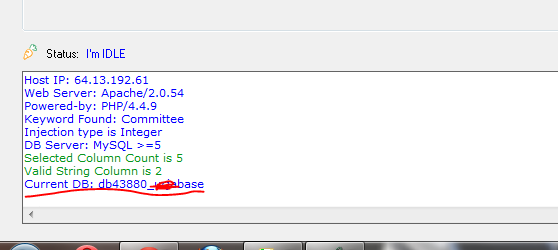
If you have already a vulnerable link then it enter in the Havij Target space bar like below picture and Click on 'Analyze' button.When you click on analyze button then it show Current Database Name like below pic...


When it show you a DB name then go to 'Table Button' and click on them like below picture...


When you click on Table Button then it shown you a new 'Get Table' name button like above picture,Click on the Get Table button,after analyze it show you table name in the Database like above pic.

Check mark any table name in my case i am check mark 'admin' and then click on the 'Get Columns' name button.It show you Present Columns name which in build in Table 'admin' like below pic...


Check mark any columns name in my case i am mark Password and click on 'Get Data' name button,It show me result data mean password of website admin Control Panel account in right side box show in below pic...


Like above process you also find the username,loginid etc. from the page.

Use Havij MD5 Decrypter for decrypt MD5 coded Password.

I think it is helpful for you like my old post,plz pass your comment.

Protect Chrome Browser By Password

0 comments

My new thread tell you how to protect your chrome browser by other user access,for protection i am use the password security.

Here we use a Chrome Extension for protect browser.

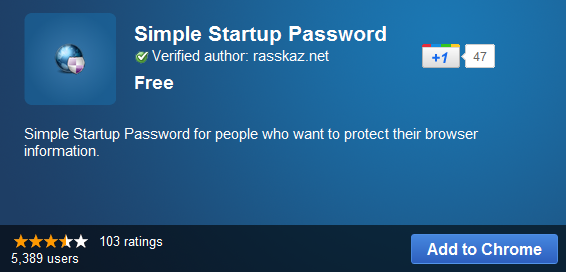
First Download the Extension By click HERE


After Installation Go to Tool option and click on them,when you click the Tool then a slide open where you found 'Extensions' click here.

When you click the Extensions then a page open like given below picture where you find 'Simple Startup Password'...


Click on Options,when you click options then a page open like below pic...


Here save your password,if you want remove password protection then disable it.

[Contest] Win-Kevin Mitnick's Book "Ghost In the Wires"

0 comments

Today i am start the Hackarde Contest Series in which you found a chance to win latest release hacking book.

So i think you are excited to know that how you can participate in this contest? No any target given by me on this Contest,here only you post your comment and if your comment is the Best Comment of Contest then you get chance to Win Contest Prize.

Below you watch a picture of book,this book write by Kevin Mitnick (I think it is not necessary given intro of this person) with William L. Simon .


This is the Prize of First Contest,so if you want win this book then plz given your good comment on this book and also on Your beloved blog Hackarde.

Last Date of Contest is 25 october 2011.I am announce the winner name since 26 october.

Remember plz write your Email address with Full name in comment box,because i am send your win copy on your Email address.

Book-Hack Attacks Testing

1 comments

Today's Book on Testing of Hack Attacks...


Very nice book which explain his topic with picture.

For Download Click HERE

Related Posts Plugin for WordPress, Blogger...

Hackarde's Search Engine- Search Hacking Tutorial,Tool and eBook

Loading
 
HACKARDE © 2011 | Designed by HrDe